You invite them over. They say it was lovely. Nobody mentions it again.
You're a good cook. That's not the problem. Your friends just know your menu almost as well as you do. The lasagne. The roast. The pasta they've had at your place a dozen times. It's always good. It just isn't the one they talk about.
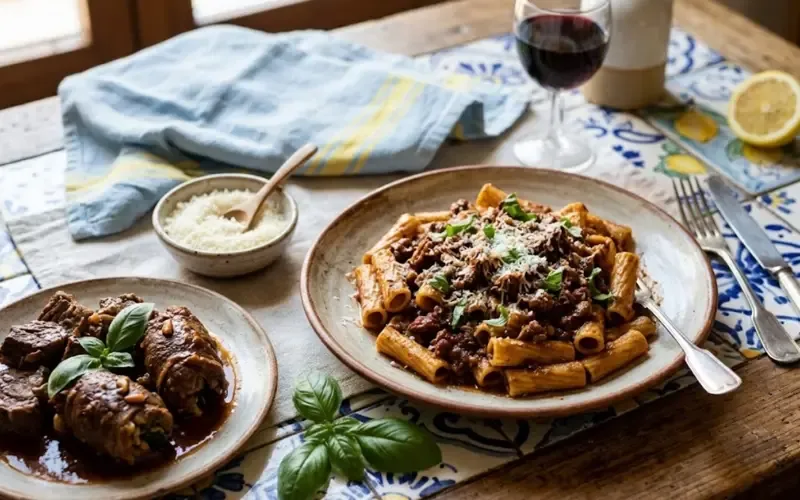
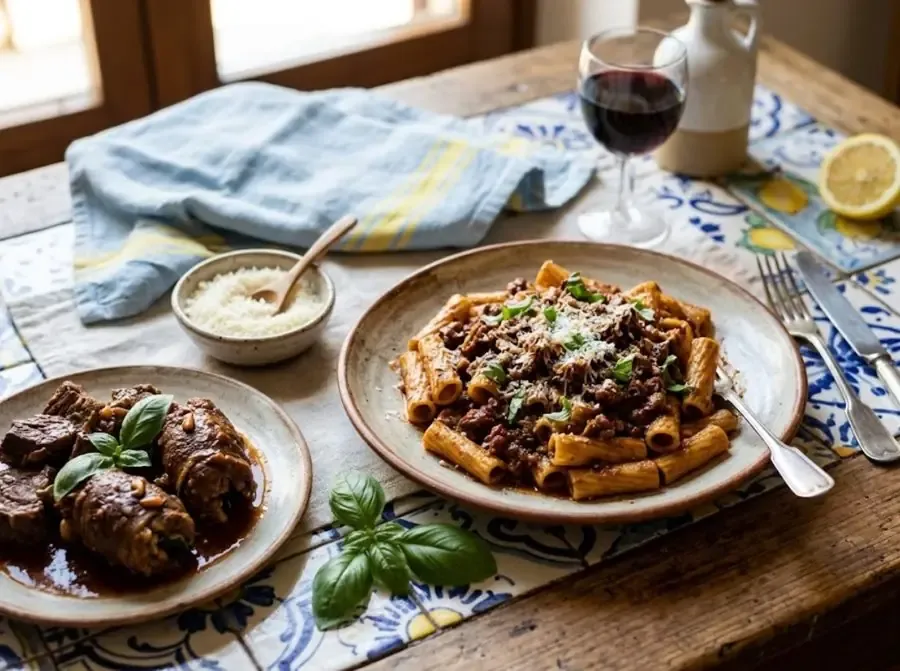
Then, one night on holiday, somewhere near the bay of Naples, a waiter puts down a plate of rigatoni with a ragù that has been on the stove since morning. Dark, glossy, the meat falling apart at the touch of a fork. Your whole table goes quiet.
You come home and try to make it. You find a recipe online, follow it to the letter, and it comes out… nice. Like bolognese with a new name. Good, just not that.
The recipe wasn't wrong. It was copied from a recipe that was copied from a recipe, each one a little flatter, until everything that made it Neapolitan was gone. The four hours on the lowest flame. The meat served after the pasta, never on it. The story your waiter told you while you ate.
The dish that makes a table go quiet was never on a blog. It was in a Neapolitan kitchen.
You don't need more recipes. You need the ones Naples actually cooks, and the stories that come with them.
Why Naples tastes like nothing else
A city that has been cooking for an audience for 2,500 years.
Naples was founded by the Greeks, ruled by the Spanish, and fed for a century by French chefs at the court of its kings. The Neapolitans took a little from everyone and made it louder, richer, more generous. That's why the crocchè is really a French croquette, why legend says the babà came from a Polish king, and why the most famous pizza in the world carries the name of a queen.
It's also a city that eats in the street and cooks for a crowd. Women fried pizza on their doorsteps after the war and let people pay a oggi a otto, eight days later. On Sundays, whole buildings smell of ragù from nine in the morning. At Christmas, every family argues about the clams.
Every dish has a story like that. Tell it as you serve, and your guests stop eating politely and start asking questions. It's half the pleasure of the evening.
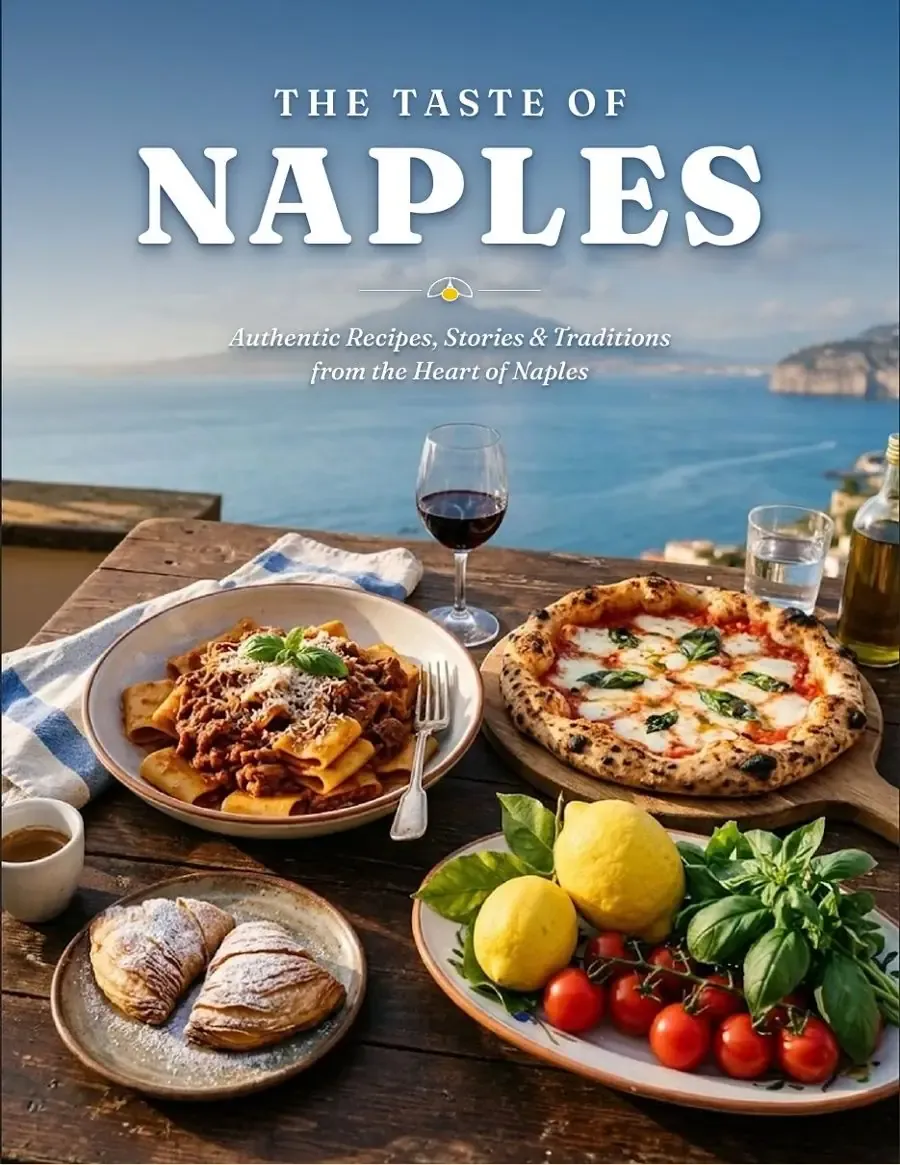
Every recipe in the book comes with its story.
Get the cookbook — US$29.99
Your next dinner party, three weeks from now
The evening your friends won't forget.
2:00 in the afternoon.
The ragù goes on the lowest flame. By four, the whole house smells like a Sunday in Naples. The recipe is printed out on the bench, already splashed from last weekend's practice run.
7:30 in the evening.
The doorbell. You bring out a tray of crocchè, still hot, the mozzarella pulling into long strings when they bite in. Somebody asks what they are. You tell them about the French chefs who cooked for the kings of Naples. Now they're listening.
8:30.
Rigatoni with the ragù, then the meat on its own, the way Naples does it. The table goes quiet for the first time all night. Then the babà, glossy with rum syrup, and the legend of the Polish king behind it.
"Hang on. Where did you learn to cook like this?"
By the end of the week, someone has asked when you're doing it again.
It won't happen with every recipe on the first try, and we won't pretend it will. But the first time it does, you'll know exactly why, and you'll already be planning the next one.
From the Neapolitan table
The ones guests ask about first
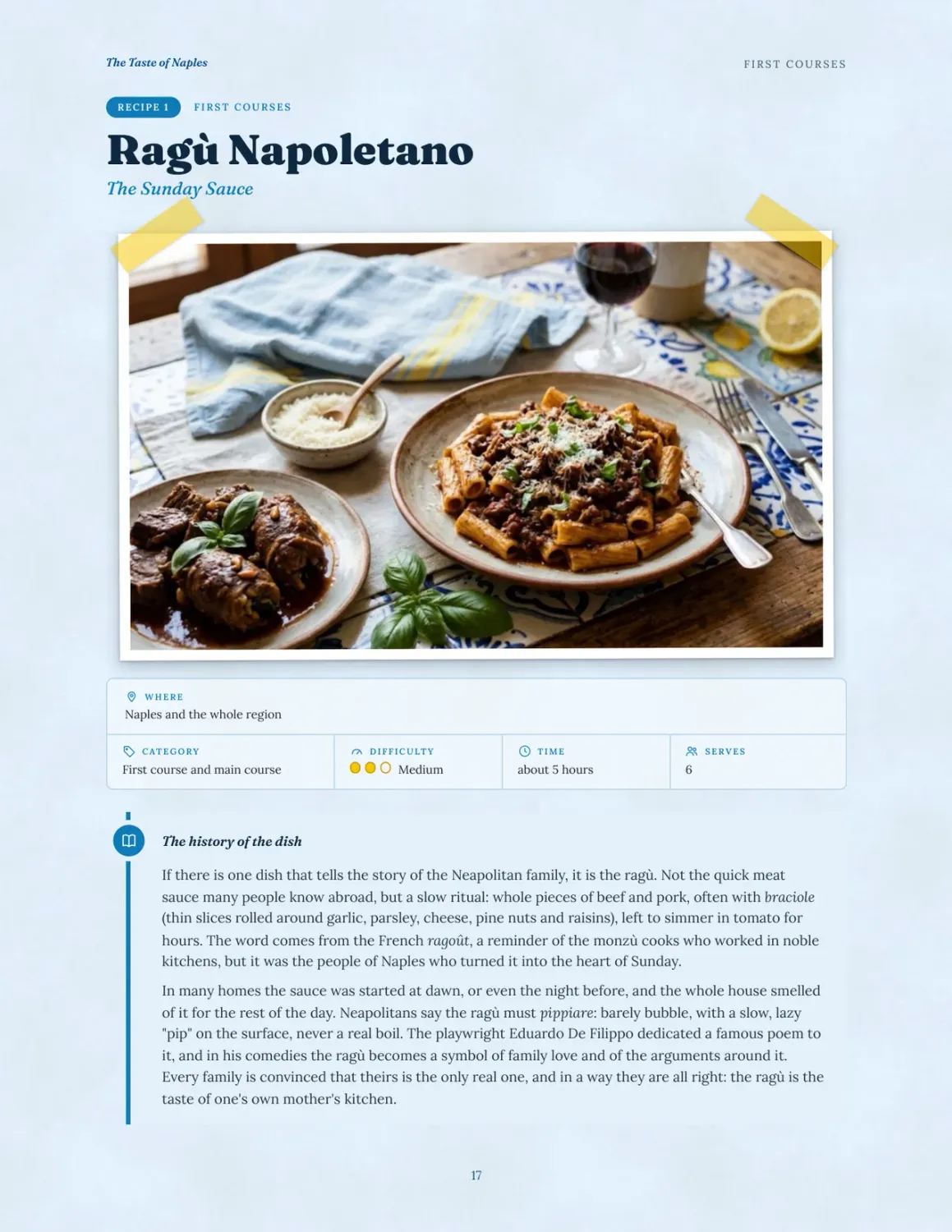
FIRST COURSESRagù Napoletano
Whole pieces of meat, four slow hours, the sauce on the pasta and the meat after.
Page 17
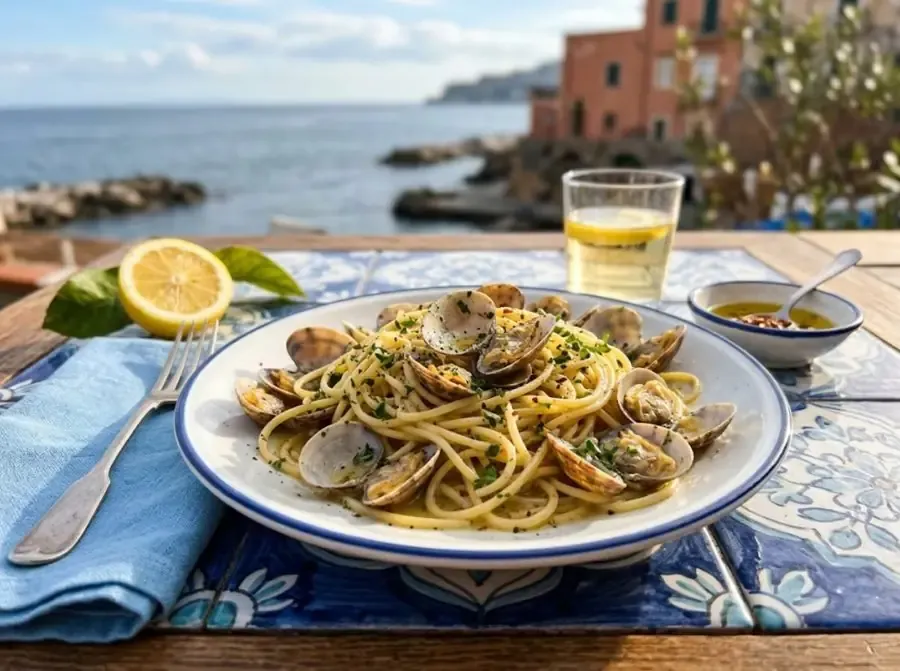
FIRST COURSESSpaghetti alle Vongole
The Christmas Eve classic. No cheese, and a simple trick for a creamy sauce.
Page 27
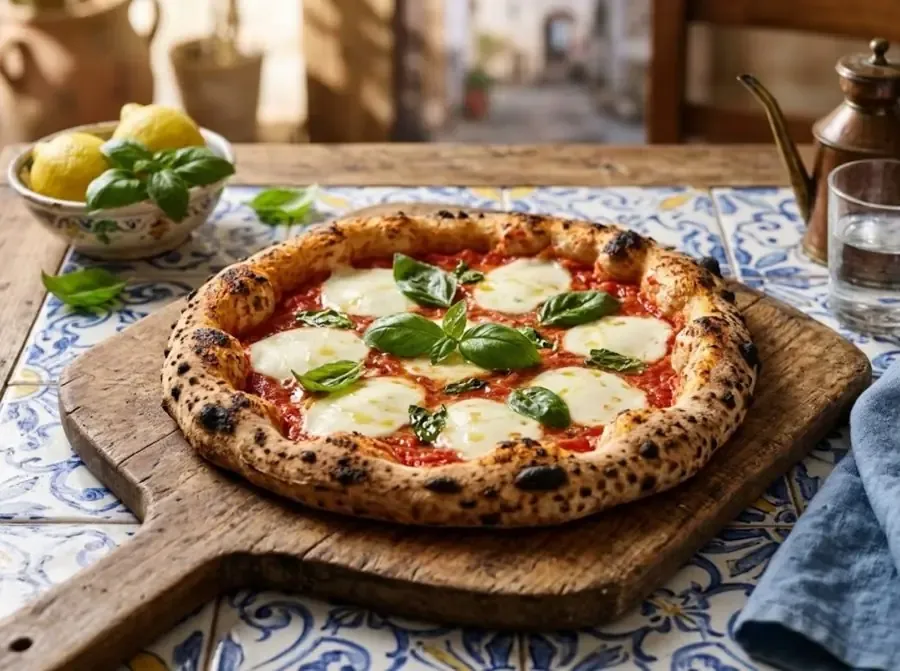
STREET FOODPizza Margherita
A long, cold rise that gets a home oven surprisingly close to Naples.
Page 34
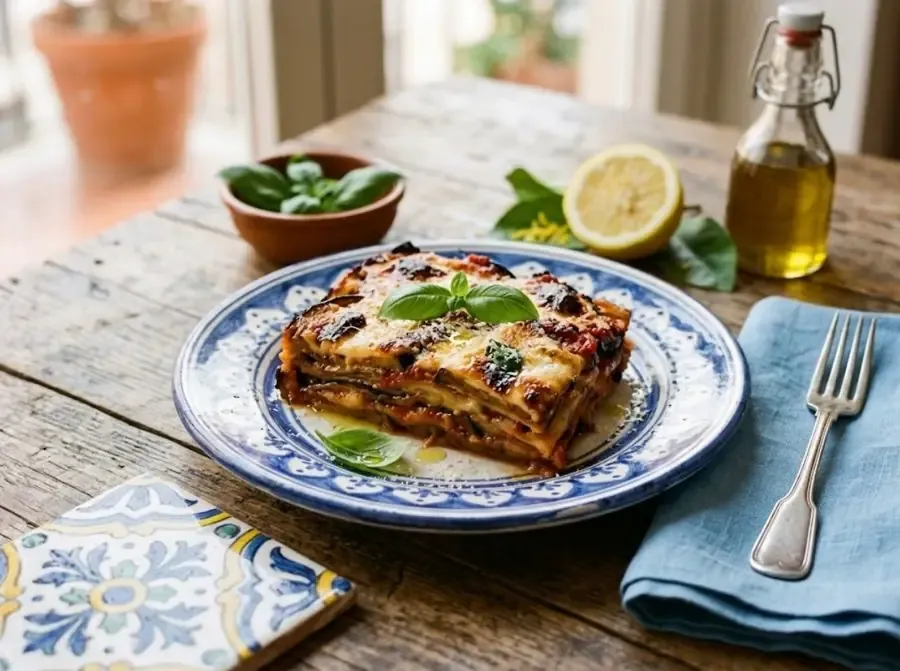
MAINSParmigiana di Melanzane
Eggplant parmigiana, the richest version of all, and why it's better made the day before.
Page 50
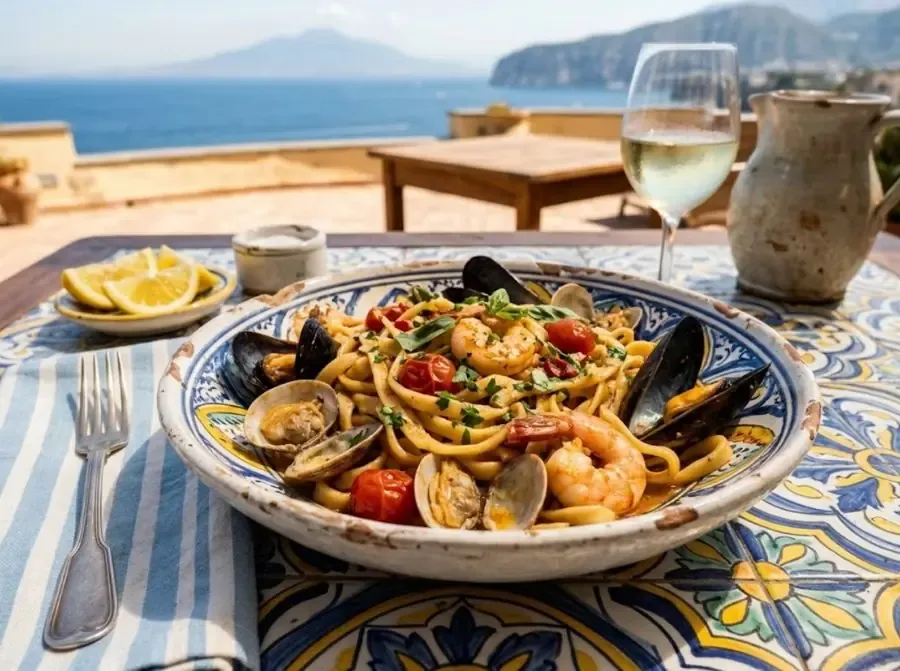
AMALFI COASTScialatielli ai Frutti di Mare
The pasta of the Amalfi Coast, with mussels, clams and prawns.
Page 59
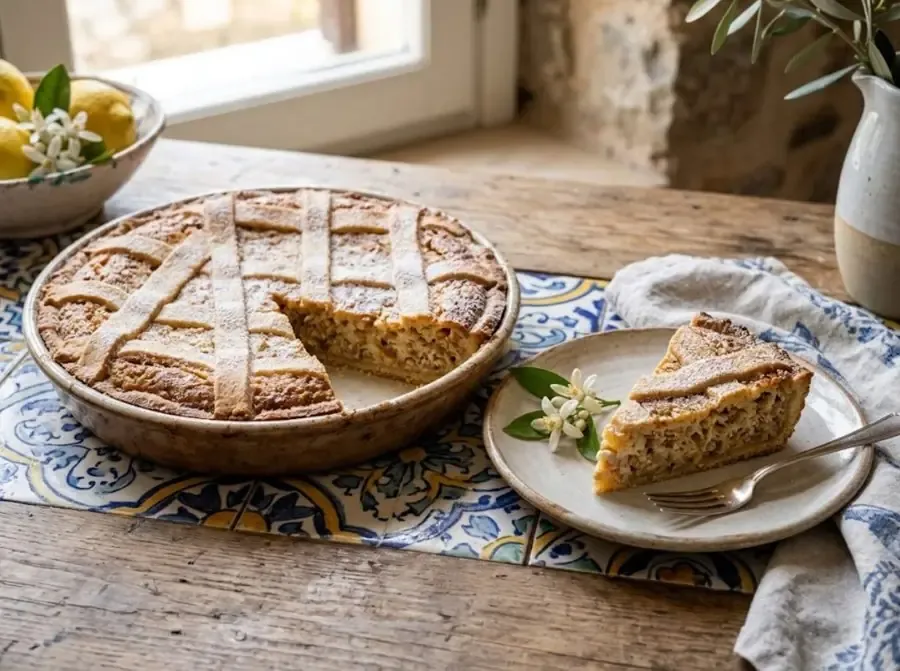
SWEETSPastiera Napoletana
Wheat, ricotta and orange blossom under a lattice. Naples at Easter.
Page 93
Get the cookbook — US$29.99
VISAPayPal🔒 Secure checkout
Who makes these books
From the makers of The Taste of Sicily
We make cookbooks about the regional cooking of southern Italy, written for people who cook it far from home. The Taste of Sicily came first. The Taste of Naples is the second.
These are the dishes Neapolitan families actually cook: the Sunday ragù, the Christmas Eve vongole, the Easter casatiello, the fried pizza that fed the city after the war. Each one is written the traditional way, with its most common variants, because in Naples every family has its own.
The history is told honestly, too. When something is legend, like Queen Margherita's pizza, the book says so.
We're a small publisher, and we answer every email ourselves.